
On this page
EU Unveils New Maritime & Ports Strategy to Strengthen the Competitiveness of the Shipbuilding and Shipping Industries
The European Union has announced a new Maritime Industrial Strategy and Ports Strategy aimed at strengthening the long-term competitiveness of Europe’s maritime sector.
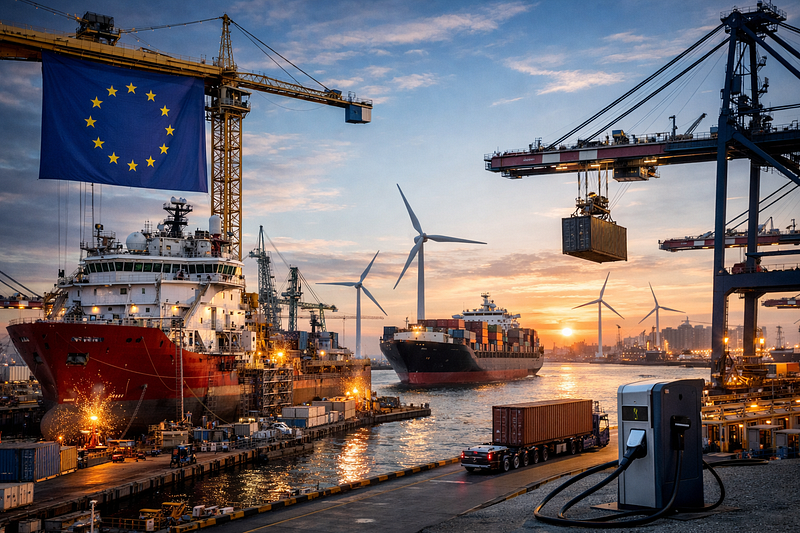
The European Union has announced a new Maritime Industrial Strategy and Ports Strategy aimed at strengthening the long-term competitiveness of Europe’s maritime sector.
The initiative reflects growing concerns about global competition, supply chain security, and the need to accelerate the green and digital transformation of maritime industries. The strategy covers the entire maritime ecosystem — including shipbuilding, maritime manufacturing, shipping, and ports — highlighting the sector’s critical role in Europe’s economy and security.
As global maritime competition intensifies, the EU is positioning its maritime sector as a strategic industry essential for trade, energy transition, and technological leadership.
Why the EU Is Introducing a New Maritime Strategy
Europe has long been a major maritime power. Its ports serve as key gateways for international trade, and its shipbuilding industry is globally recognized for high-value vessels such as cruise ships and specialized offshore platforms.
However, the sector is facing several challenges:
- Increasing competition from global shipbuilding powers
- Rising geopolitical and supply chain risks
- The need to decarbonize maritime transport
- Rapid digital transformation of shipping and ports
The new EU strategy aims to address these challenges by strengthening competitiveness, resilience, and sustainability across the maritime value chain.
Key Focus Area 1: Strengthening the Maritime Industrial Base
A central component of the EU strategy is reinforcing the maritime manufacturing sector.
The initiative targets the broader maritime value chain, including:
- Shipbuilding and ship repair
- Maritime equipment manufacturing
- Marine engineering and high-tech systems
- Shipping and maritime logistics
By supporting innovation and industrial cooperation, the EU aims to ensure that Europe retains control over key maritime technologies and maintains its global competitiveness.
This approach reflects a broader trend in Europe toward strategic industrial policy, where critical industries are supported to ensure economic security and technological independence.
Key Focus Area 2: Transforming Ports into Strategic Infrastructure
Ports are another central pillar of the new strategy.
The EU recognizes ports as critical hubs for:
- international trade
- logistics networks
- energy distribution
- military mobility
To meet future demands, the EU Ports Strategy focuses on improving security, sustainability, and digitalizationacross port infrastructure.
This includes initiatives aimed at:
- modernizing port infrastructure
- supporting the clean energy transition
- strengthening digital port operations
- enhancing supply chain resilience
In this vision, ports are no longer just logistics gateways but strategic infrastructure supporting Europe’s economic and geopolitical interests.
Key Focus Area 3: Supporting the Green and Digital Transition
Another major objective of the strategy is accelerating the maritime sector’s transition toward a more sustainable and digital future.
Key priorities include:
- decarbonizing maritime transport
- developing clean maritime technologies
- promoting energy-efficient shipping
- integrating digital solutions in maritime operations
Ports will also play a key role in the energy transition by supporting alternative fuels and electrification infrastructure for ships.
This aligns with broader EU climate initiatives such as the European Green Deal.
A Strategic Response to Global Maritime Competition
The new strategy also reflects concerns about the shifting balance of power in global maritime industries.
European shipbuilding and maritime manufacturing sectors are facing increasing pressure from global competitors, particularly in Asia. The EU therefore seeks to reinforce its industrial capacity and strengthen supply chain resilience.
In addition, policymakers are paying closer attention to foreign investments in strategic port infrastructure, reflecting growing geopolitical sensitivities around critical logistics assets.
What This Means for the Global Maritime Industry
The EU’s new maritime strategy signals several important trends for the global maritime sector:
1. Maritime industries are becoming strategic industries.
Governments are increasingly treating shipbuilding, ports, and shipping as critical national infrastructure.
2. Industrial policy is returning to shipbuilding.
Public investment and policy support will likely play a larger role in shaping the maritime sector.
3. Ports are evolving into energy and logistics hubs.
Future ports will support not only cargo handling but also energy systems and digital logistics networks.
Implications for Global Shipbuilding
For shipbuilding nations such as South Korea, China, and Japan, the EU strategy sends a clear signal:
The competition in maritime industries is shifting from pure manufacturing capacity toward technology, sustainability, and digital capabilities.
Future shipbuilding competitiveness will likely depend on:
- advanced ship technologies
- green propulsion systems
- digital ship integration
- resilient maritime supply chains
Final Thoughts
The EU Maritime and Ports Strategy represents more than a policy update — it reflects a strategic vision for the future of Europe’s maritime industries.
By strengthening its maritime manufacturing base, modernizing ports, and accelerating the green and digital transition, the EU aims to secure its position as a leading global maritime power.
In a world where maritime trade underpins global economic stability, the future of shipbuilding, shipping, and ports will increasingly be shaped not only by markets, but also by strategic industrial policy.